
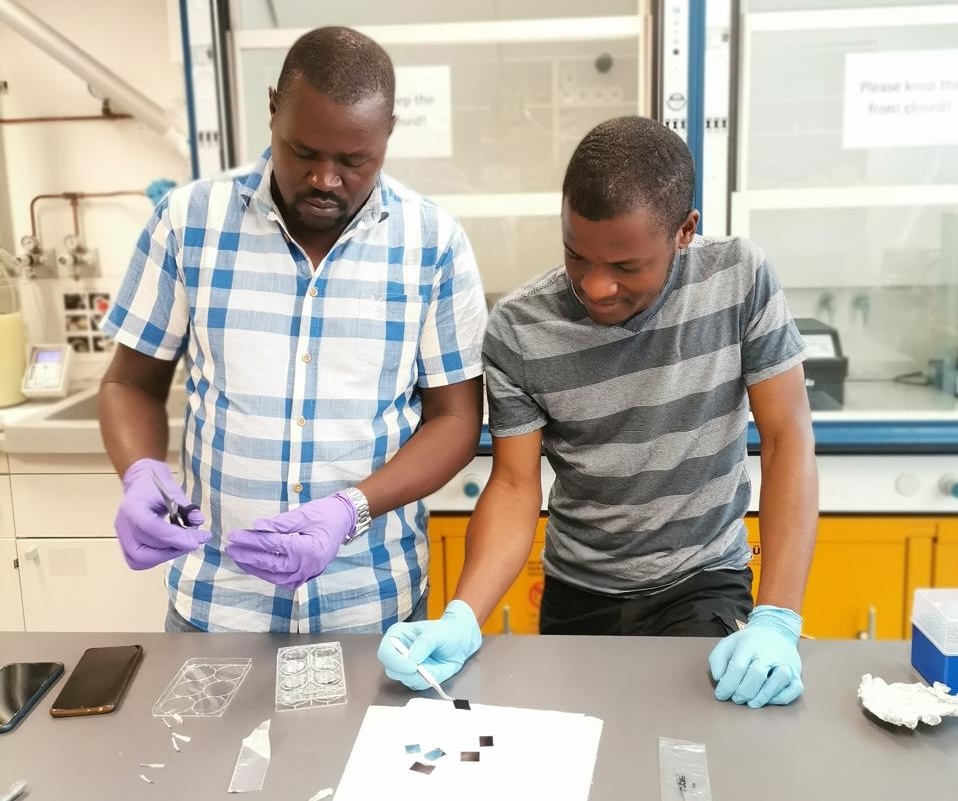
A new UK-Africa partnership will develop affordable, all-perovskite tandem solar cells for Africa. The SOLACE (Solar Alliance on Clean Energy) project unites experts in the UK, Kenya, Rwanda and Tanzania to co-develop these next-generation solar technologies alongside the necessary training and knowledge exchange.
Access to affordable, reliable and clean energy remains a major challenge across many African countries. In Kenya, Rwanda and Tanzania, energy access and security continue to limit economic development, healthcare delivery and education. Solar energy provides a clear pathway to address these challenges, but technologies must be efficient, scalable and suited to local environmental conditions.
Silicon solar technologies, which currently dominate the market, are expensive and energy-intensive to manufacture. They have yet to be manufactured anywhere in Africa and aren’t always suited to local contexts on the continent.
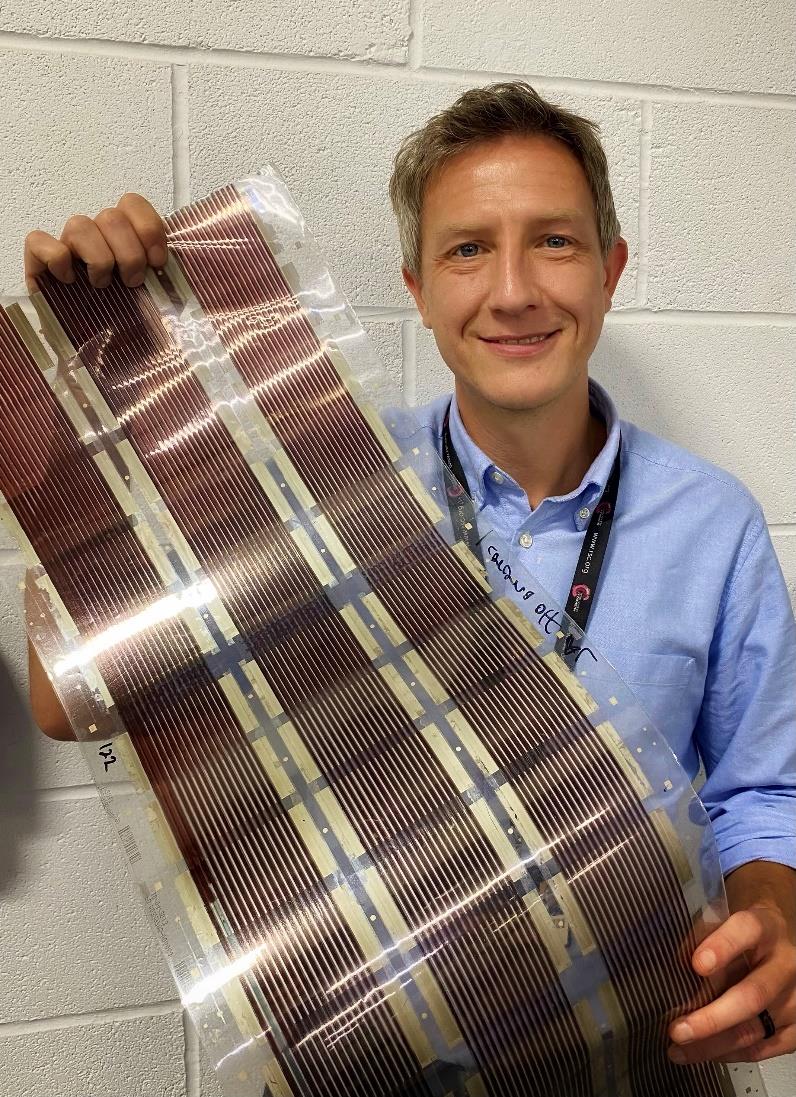
This is where all-perovskite tandem solar cells may provide an answer. Perovskite solar cells can be manufactured using low-temperature, solution-based processes. As a result, the energy input and production costs are significantly reduced compared to conventional silicon technologies. By combining two perovskite absorbers in a tandem architecture, SOLACE aims to increase efficiency while maintaining compatibility with low-cost, scalable manufacturing routes. Local manufacturing would also be more feasible, keeping more of the value chain within Africa, creating jobs and boosting the economy.
How will SOLACE achieve its aims?
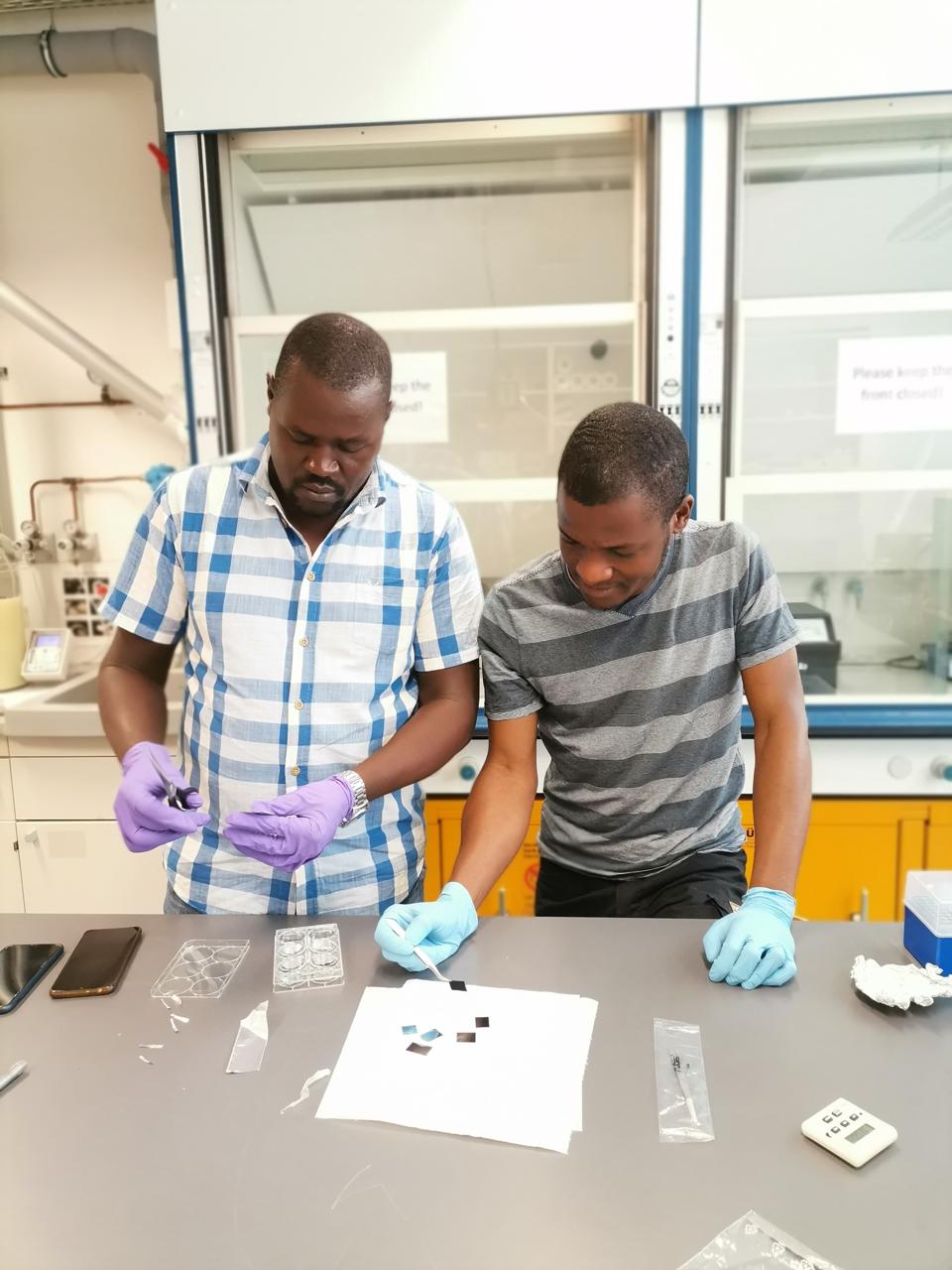
Led by Swansea University, SOLACE brings together laboratories in the UK, Kenya, Rwanda and Tanzania to co-develop these perovskite tandems. At the same time, it will build the local ecosystem and talent to progress them. The project will focus on improving the fundamental understanding of charge transport and recombination and enhancing device stability. It will develop fabrication approaches that are robust under real-world operating conditions, including heat and humidity typical of equatorial climates.
Long-term capability will be developed through training schools, researcher exchanges and a UNESCO Campus Africa bootcamp. These events will help develop skills in solar device physics, fabrication and characterisation across partner institutions. The project also places strong emphasis on inclusion, with a commitment to gender equity and the development of early career researchers.
SOLACE will benefit policymakers, the industrial and research community, and partner countries through cutting edge solar research, practical training, and evidence-based guidance on solar technologies suited to equatorial climates.
Building on existing collaborations
SOLACE came about thanks to a TEA@SUNRISE event in January 2026. The symposium brought together researchers from across the globe specialising in next-generation solar and energy access. The project also builds on existing UK–Africa collaborations. For example, the REACH-PSM project is developing pathways for local perovskite solar module manufacturing in Nigeria, Rwanda, Kenya, and South Africa. SOLACE is also supported by the Swansea University UNESCO Chair in Sustainable Energy Technologies, which promotes international collaboration and capacity building for sustainable energy innovation.
Professor Matthew Davies, project lead at Swansea University, said:
“SOLACE brings together complementary expertise across Africa and the UK to deepen our understanding of next-generation perovskite solar devices while building long-term research capability. By combining advanced characterisation, modelling and fabrication, we aim to develop the understanding needed to deliver efficient, stable solar technologies suited to deployment in African climates.”
Dr Francis Otieno, project co-lead at Maseno University Kenya, said:
“The SOLACE project represents a powerful platform for advancing research collaboration between the UK and Africa, fostering deep scientific exchange and capacity building. By strengthening expertise in fundamental studies such as charge transport and material dynamics, the initiative is cultivating a new generation of skilled researchers while laying the groundwork for scalable, low-cost solar technologies. For Maseno University, Kenya, this is an opportunity not only to participate in cutting-edge innovation, but to co-create solutions with strong potential for local manufacturing, widespread deployment, and long-term energy sustainability.”
SOLACE is funded by the Science and Technology Facilities Council (STFC) through the UK Research and Innovation (UKRI) International Science Partnerships Fund (ISPF), supporting UK–Africa collaboration to advance sustainable energy solutions and capacity building.