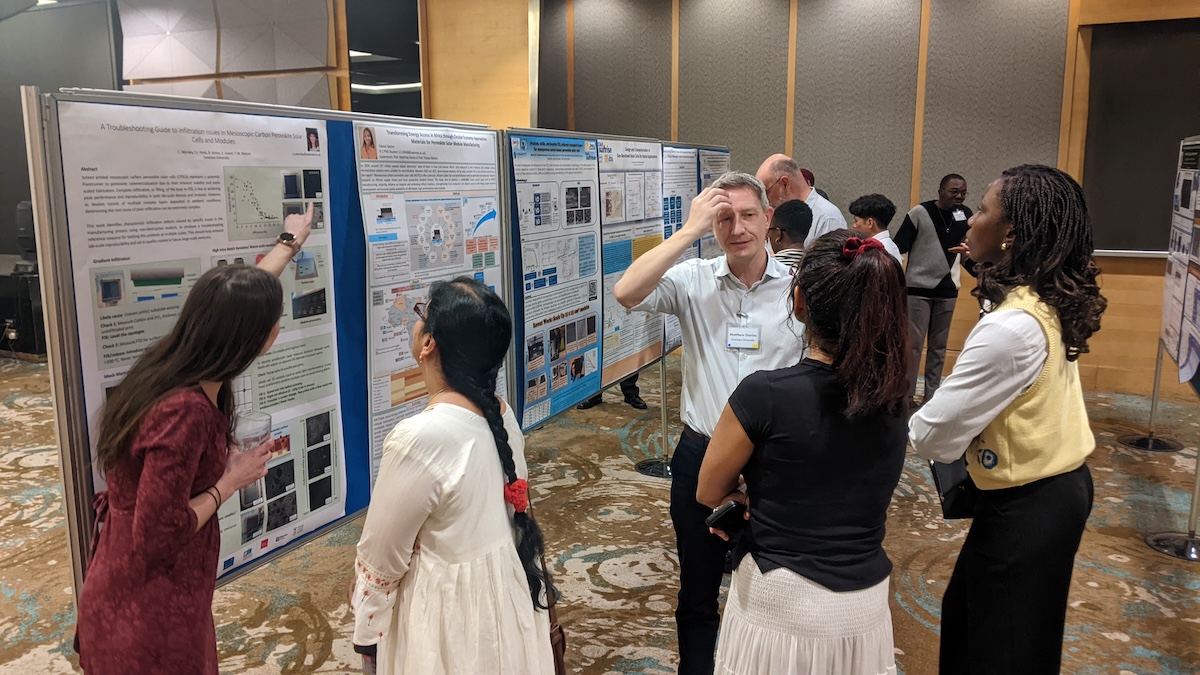
Here are a selection of posters from our January 2026 symposium, held in Kuala Lumpur Malaysia. Click on the titles to view a PDF file of each poster.
Anatase, Rutile, and Brookite TiO2 Electron Transport Layers for Mesoporous Carbon-based Perovskite Solar Cells
Authors: Beatriz E. Heredia-Cervera, Mahmoud Nabil, Wendy Y. Padrón-Hernández, Renan Escalante, Antonio J. Riquelme, Dena Pourjafari, and Gerko Oskam.
‘Outstanding Poster’ prize winner.
This work investigates the influence of the TiO2 crystal structure and nanomaterial morphology on the effectiveness of the electron selective contact in triple-stack mesoporous, carbon-based perovskite solar cells (C-PSCs) and evaluates the impact of the relative humidity (45% and 60% RH) during the infiltration on the device characteristics.

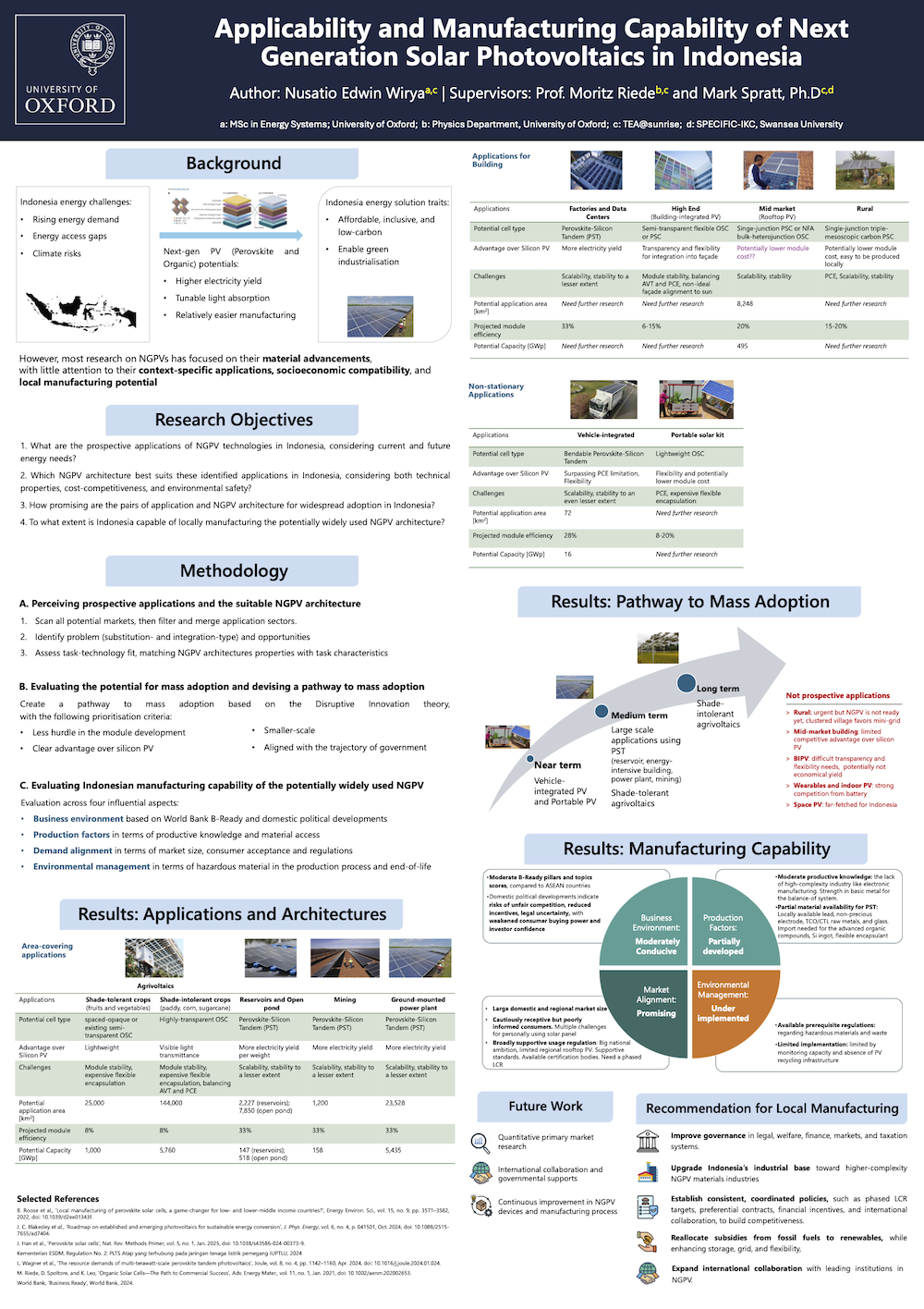
Applicability and Manufacturing Capability of Next Generation Solar Photovoltaics in Indonesia
Author: Nusatio Edwin Wirya. Supervisors: Moritz Riede and Mark Spratt.
‘Outstanding Poster’ prize winner.
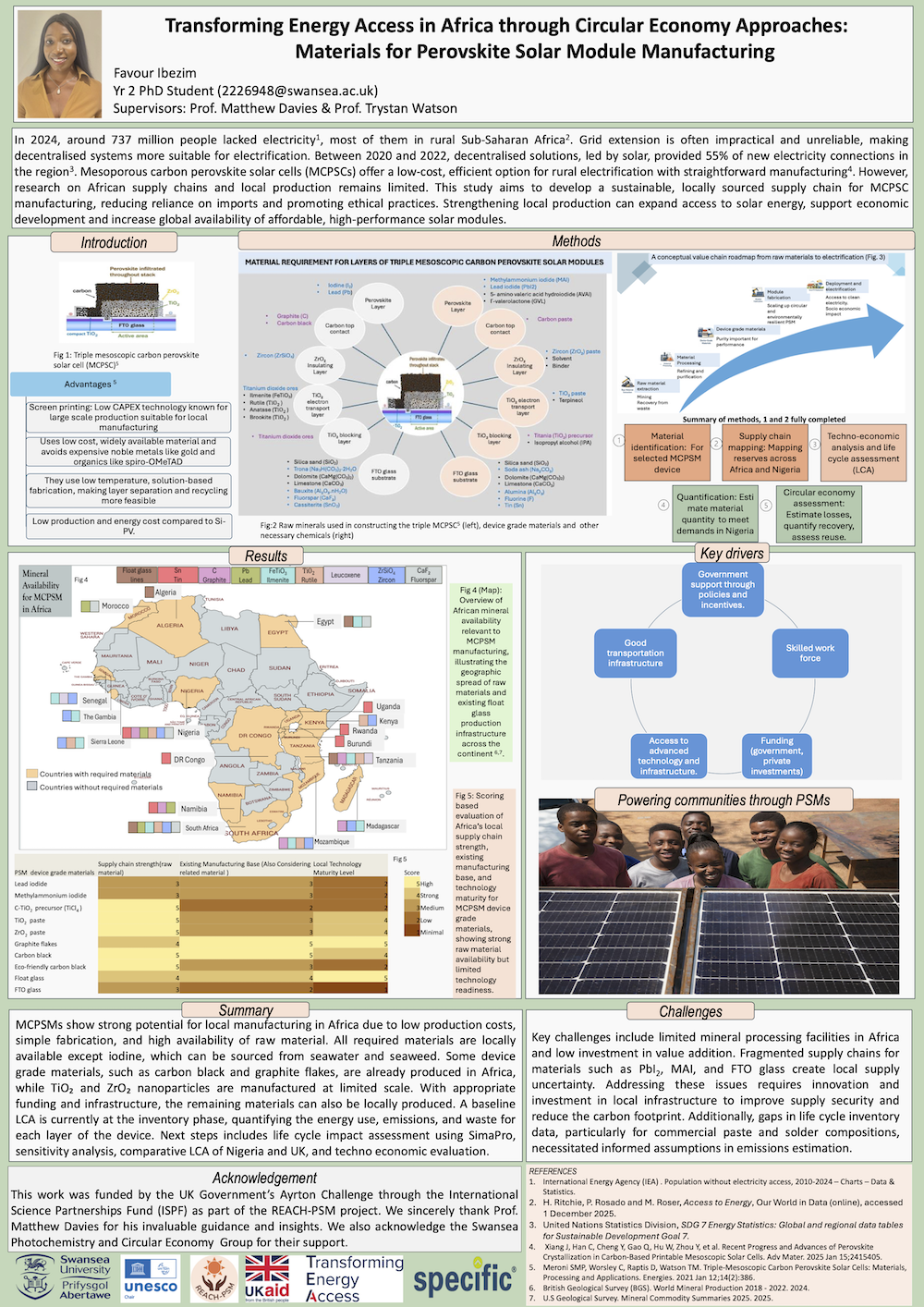
Transforming Energy Access in Africa through Circular Economy Approaches: Materials for Perovskite Solar Module Manufacturing
Author: Favour Ibezim. Supervisors: Matthew Davies and Trystan Watson.
‘Outstanding Poster’ prize winner.
In 2024, around 737 million people lacked electricity, most of them in rural Sub-Saharan Africa. Grid extension is often impractical and unreliable, making decentralised systems more suitable for electrification. Between 2020 and 2022, decentralised solutions, led by solar, provided 55% of new electricity connections in the region. Mesoporous carbon perovskite solar cells (MCPSCs) offer a low-cost, efficient option for rural electrification with straightforward manufacturing. However, research on African supply chains and local production remains limited. This study aims to develop a sustainable, locally sourced supply chain for MCPSC manufacturing, reducing reliance on imports and promoting ethical practices. Strengthening local production can expand access to solar energy, support economic development and increase global availability of affordable, high-performance solar modules.
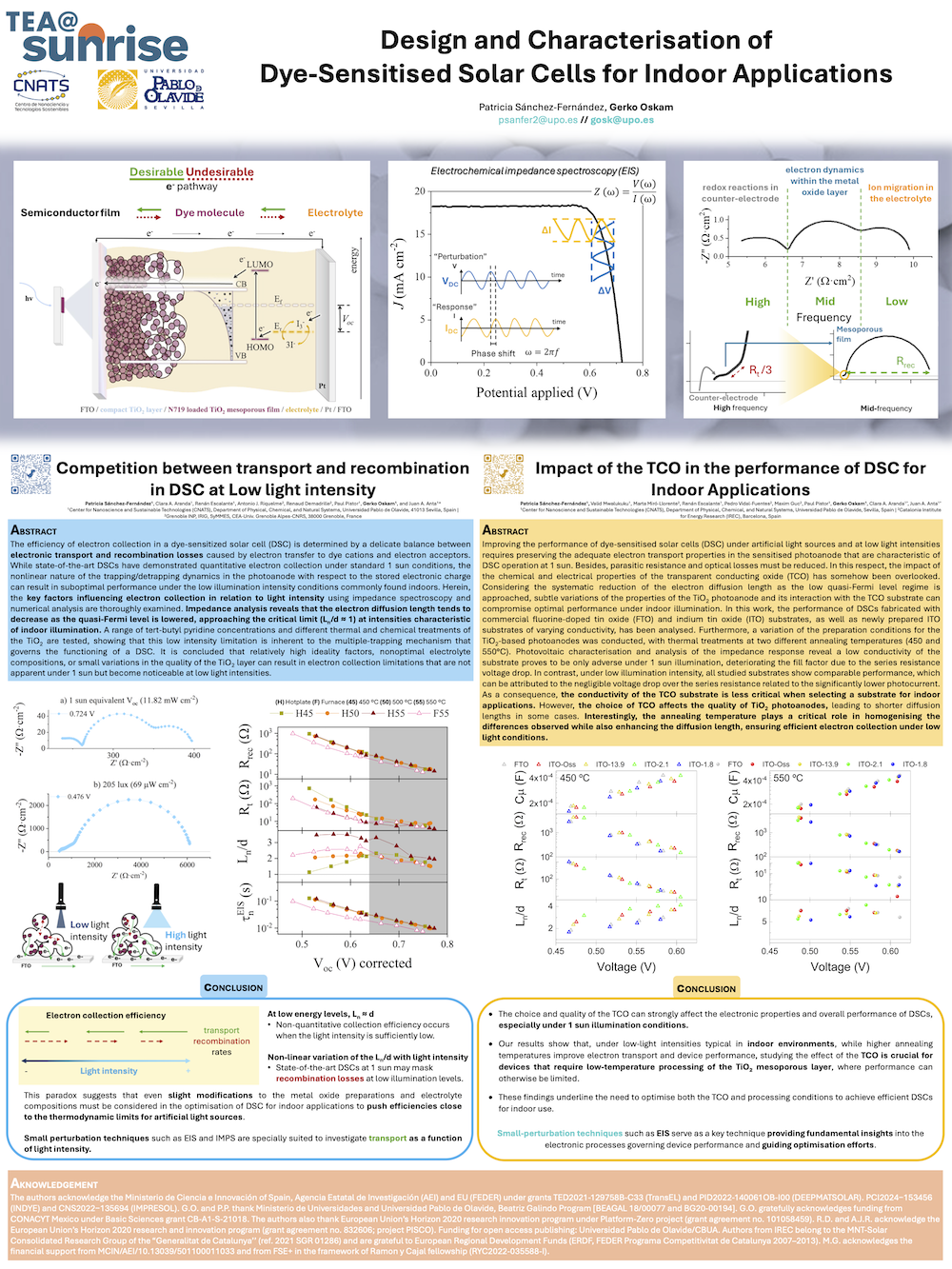
Design and Characterisation of Dye-Sensitised Solar Cells for Indoor Applications
Authors: Patricia Sánchez-Fernández and Gerko Oskam.
The efficiency of electron collection in a dye-sensitized solar cell (DSC) is determined by a delicate balance between electronic transport and recombination losses caused by electron transfer to dye cations and electron acceptors. While state-of-the-art DSCs have demonstrated quantitative electron collection under standard 1 sun conditions, the nonlinear nature of the trapping/detrapping dynamics in the photoanode with respect to the stored electronic charge can result in suboptimal performance under the low illumination intensity conditions commonly found indoors. Herein, the key factors influencing electron collection in relation to light intensity using impedance spectroscopy and numerical analysis are thoroughly examined. Impedance analysis reveals that the electron diffusion length tends to decrease as the quasi-Fermi level is lowered, approaching the critical limit (Ln/d ≈ 1) at intensities characteristic of indoor illumination. A range of tert-butyl pyridine concentrations and different thermal and chemical treatments of the TiO2 are tested, showing that this low intensity limitation is inherent to the multiple-trapping mechanism that governs the functioning of a DSC. It is concluded that relatively high ideality factors, nonoptimal electrolyte compositions, or small variations in the quality of the TiO 2 layer can result in electron collection limitations that are not apparent under 1 sun but become noticeable at low light intensities.
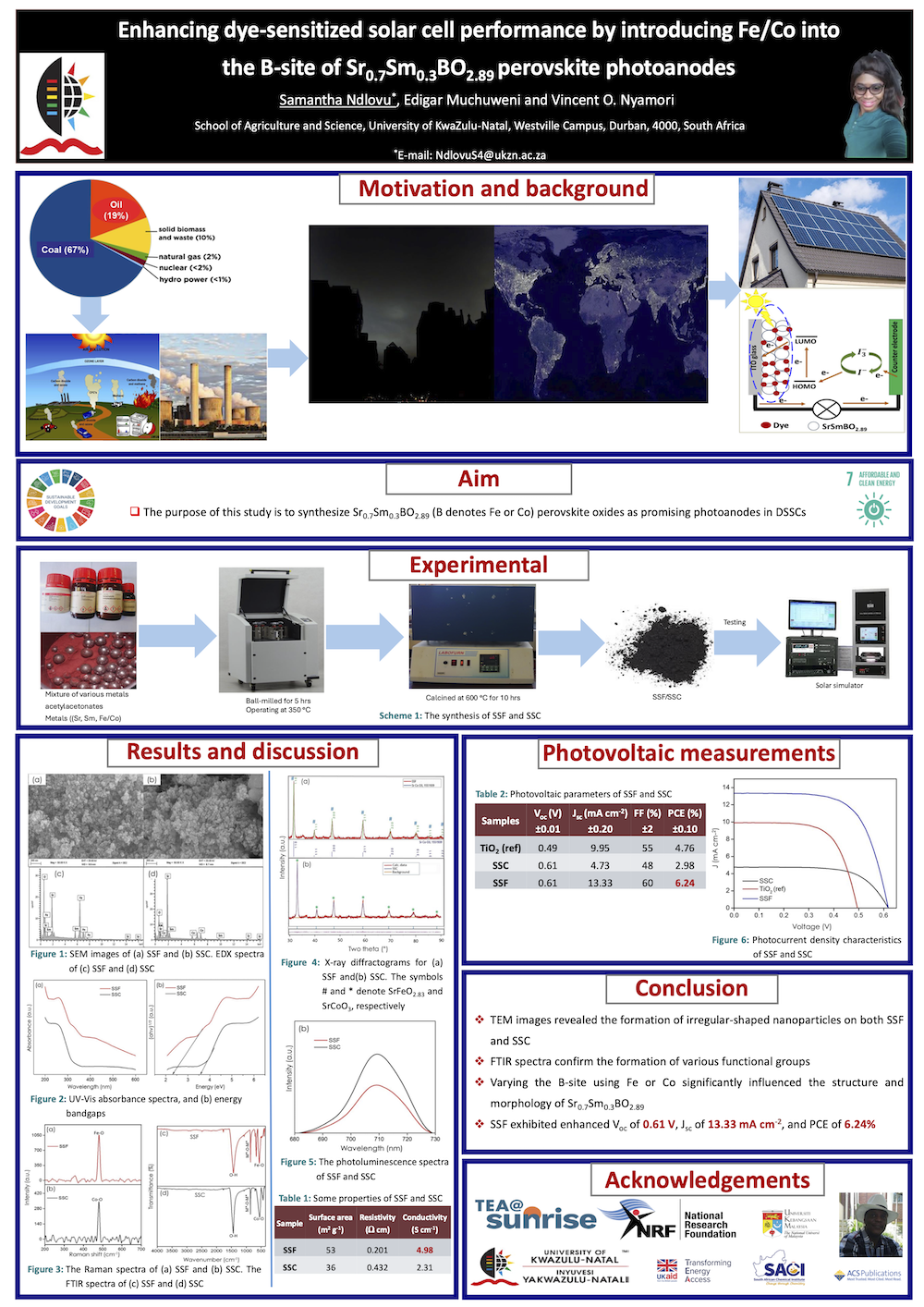
Enhancing Dye-Sensitised Solar Cell Performance by Introducing Fe/Co into the B-site of Sr0.7BO2.89 Perovskite Photoanodes
Authors: Samantha Ndlovu, Edigar Muchuweni and Vincent O. Nyamori.
The purpose of this study is to synthesize Sr0.7Sm0.3BO2.89 (B denotes Fe or Co) perovskite oxides as promising photoanodes in dye-sensitised solar cells.
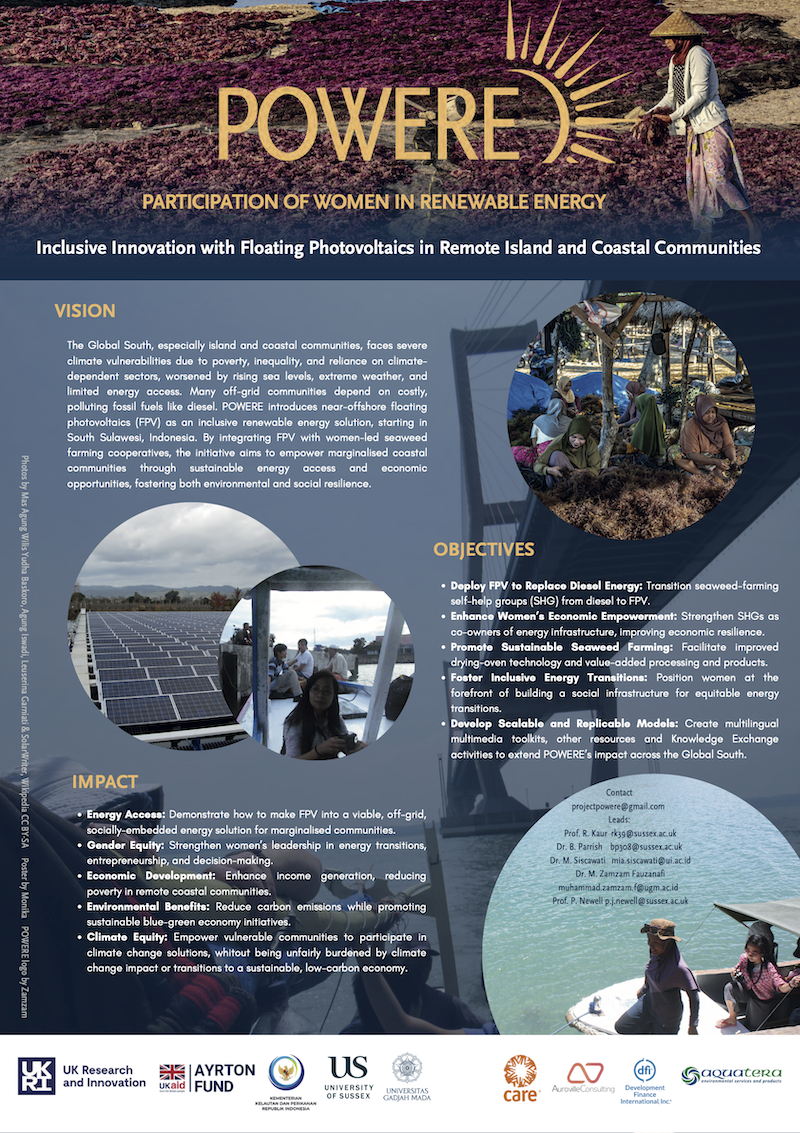
POWERE: Participation of Women in Renewable Energy
Authors: Prof Raminder Kaur, POWERE project
The Global South, especially island and coastal communities, faces severe climate vulnerabilities due to poverty, inequality, and reliance on climate- dependent sectors, worsened by rising sea levels, extreme weather, and limited energy access. Many off-grid communities depend on costly, polluting fossil fuels like diesel. POWERE introduces near-offshore floating photovoltaics (FPV) as an inclusive renewable energy solution, starting in South Sulawesi, Indonesia. By integrating FPV with women-led seaweed farming cooperatives, the initiative aims to empower marginalised coastal communities through sustainable energy access and economic opportunities, fostering both environmental and social resilience.